
The Legacy of My Acharya
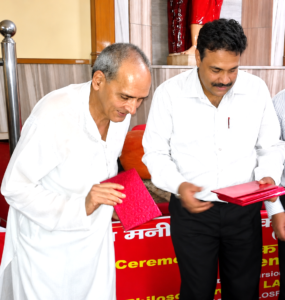
Dr. Kedarnath Prabhakar
9 May 1932 – 31 July 2022
In whose vision, inspiration, and blessings lie the roots of
SehAranya Oriental Research Centre
Dr. Kedarnath Prabhakar—founder of Ramtirtha Kendra and Bharatiya Jyotirvigyan Anusandhan Sansthan, Saharanpur, Uttar Pradesh—was a luminous exponent of the Indian intellectual tradition. A fountain of universal love, he was a distinguished scholar in whom erudition, historical insight, literary excellence, and scientific sensibility found a remarkable synthesis.
He authored numerous authoritative books and research papers on Indian knowledge systems and the profound mysteries of the ancient sciences, many of which continue to serve as guiding lights for scholars and seekers alike.
As the editor of the acclaimed journals Kalavigyan and Vedachakshu, he made an enduring contribution to the revival and dissemination of India’s intellectual, spiritual, and scientific heritage.
From Sacred Forests to SehAranya Oriental Research Centre
Aranya
In ancient times, the region now known as Haridwar—where the sacred Ganga descends from the Himalayas to meet the plains—was a vast expanse of dense forests once called Aranya.
Mayapuri & Gangadwar
The region bore different names across the ages—Gangadwar, as chronicled in the Vana Parva of the Mahabharata, and Mayapuri, venerated in the Garuda Purana as one of the seven sacred Puris of Bharat.
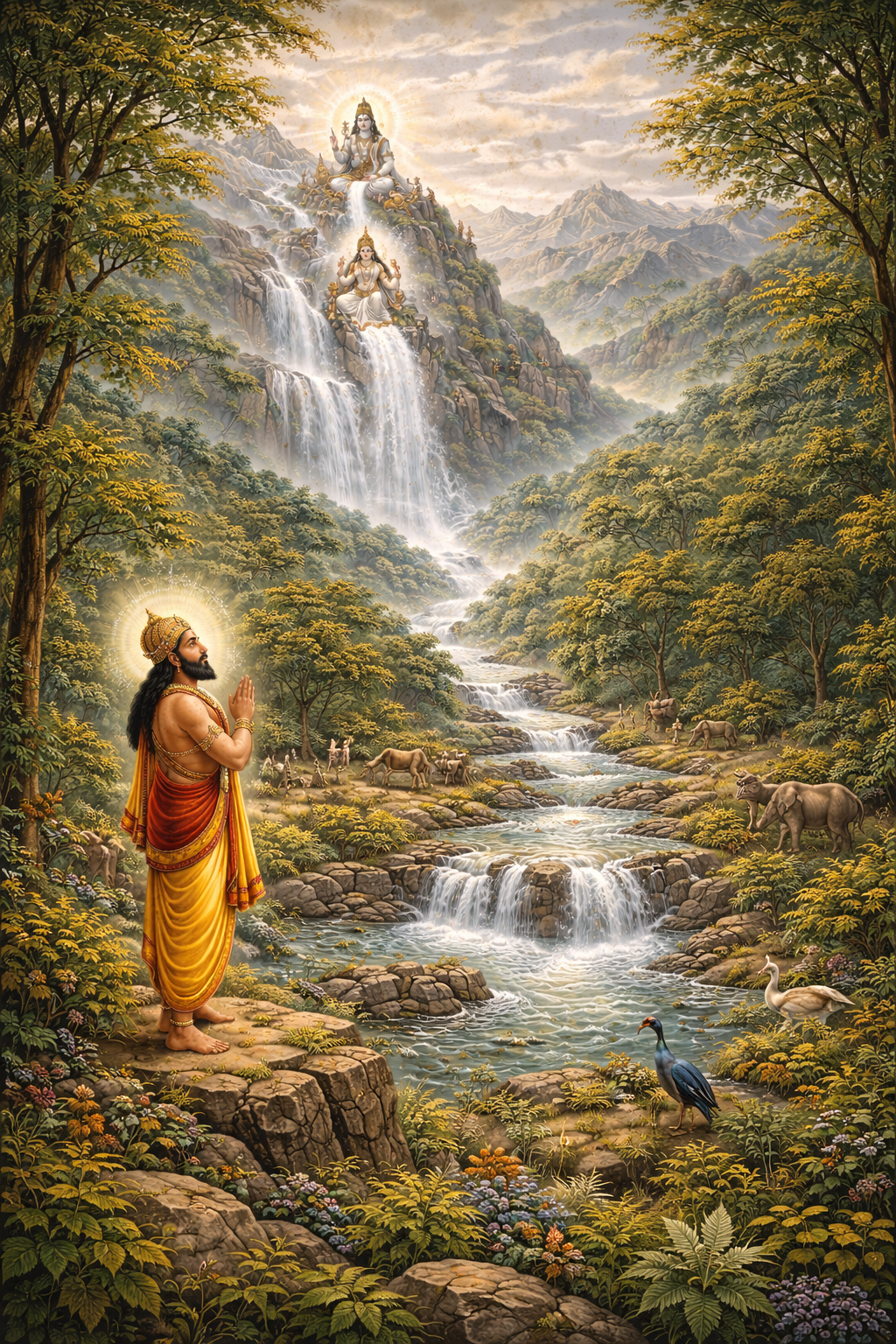
Bhagiratha with Ganga
Hub for Rishis
Because of its strategic geographical placement and its status as Kumbhnagari determined through ancient astro-computations, Haridwar has always been a revered hub for Rishis.
SehAranya
Over time, this forest region expanded beyond the Haridwar area and came to be known as SehAranya. In ancient times, the extensive tract corresponding to present-day Saharanpur was covered with dense forests and was therefore designated as an aranya (forest region). The area formed part of the cultural and spiritual sphere of Mayapuri (present-day Haridwar), where, since Vedic times, the traditions of sages, hermitages, and centres of learning had flourished.
Geographically, the entire region lay between two natural boundaries—the Shivalik mountain range and the Yamuna River. Owing to this distinctive setting, it came to be known as SehAranya, meaning a united or contiguous forest tract. The term aranya has been widely employed in Vedic and Puranic literature to denote forested regions, while the prefix seh signifies its extended and interconnected character.
With the passage of time, through the natural evolution of language and pronunciation, the name SehAranya gradually transformed into Saharanyapuri and eventually assumed its present form, Saharanpur.
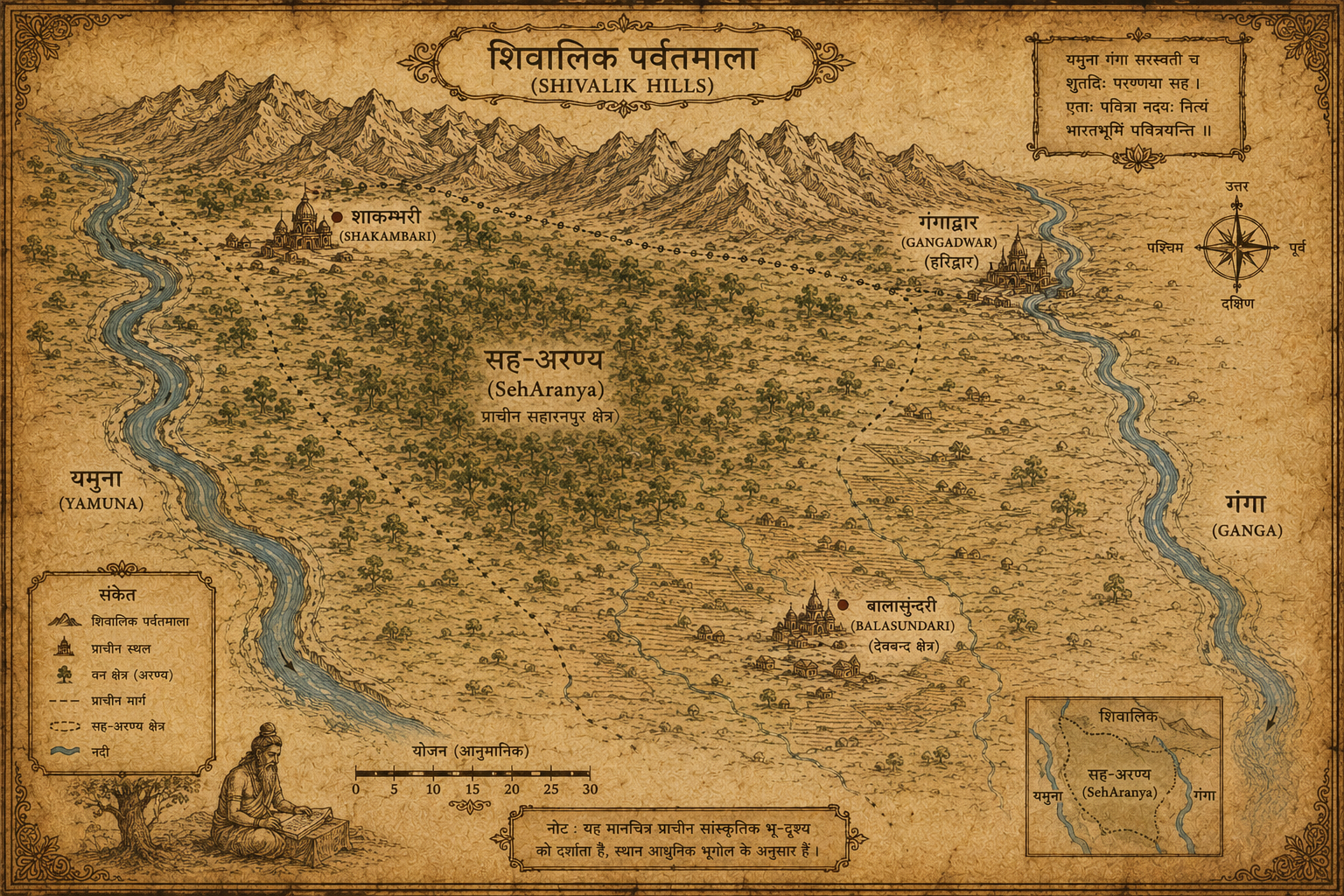
This map is an artistic reconstruction of the ancient cultural landscape of SehAranya, based on present-day geography and traditional associations. It is intended for illustrative purposes and is not a precise historical map.
Sharada Peeth and the Rishi Tradition
According to the Devi Mahapurana—traditionally attributed to Krishna Dvaipayana Vedavyasa—during the primordial age of Krita Yuga, the sacred Sharada Peeth was established in the Sharada region of Kashmir through the austerities and prayers of Rishi Shandilya.
Subsequently, an illustrious assembly of great sages—Rishi Kapila, Atri, Vashishtha, Kashyapa, Gautama, Lomasha, Shashtika, Upamanyu, Dhyama, Galava, and others—gathered at this ancient Prayaga of Kashmir, the confluence of the Madhumati, Vitasta, and Kishanganga rivers. There, invoking the Primordial Divine Shakti, they sought the flourishing of abundant vegetation for the welfare of humanity.
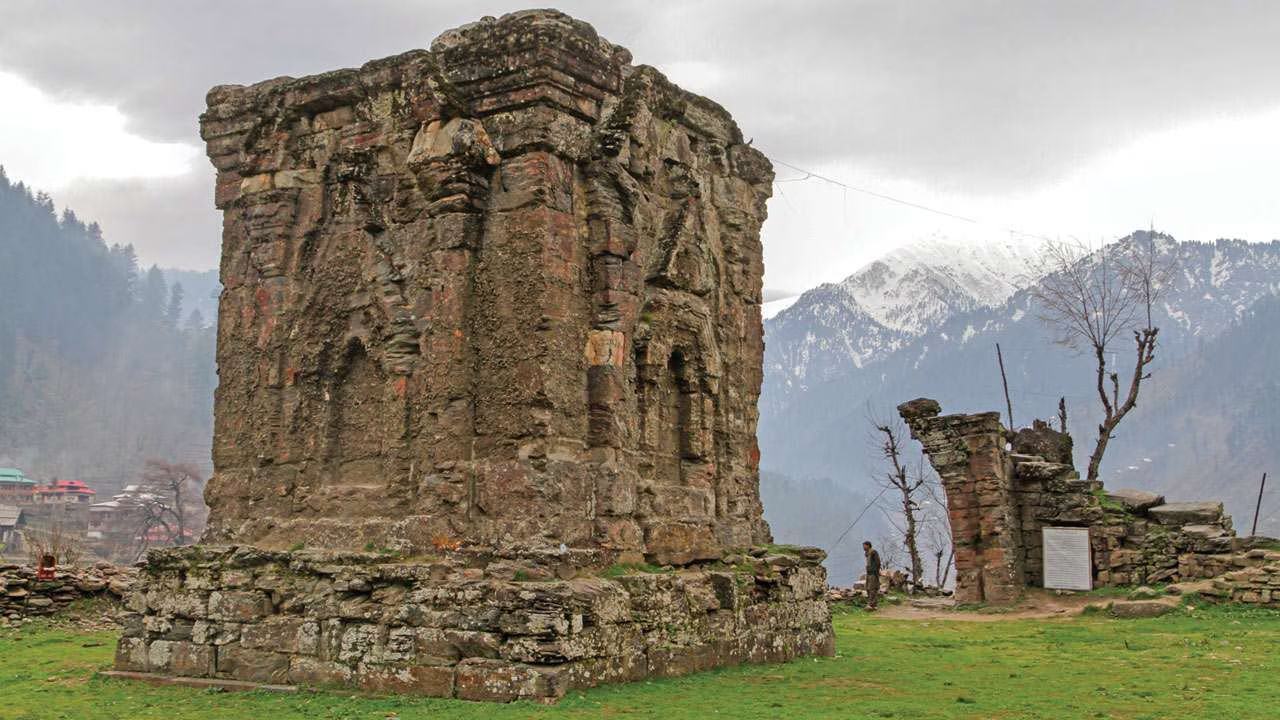
The surviving Sanctum Sanctorum of Sharada Peeth in the Neelum Valley (then Kishanganga Ghati) of Pakistan-occupied Kashmir stands as a silent reminder of one of the foremost centres of the ancient Indian knowledge tradition.
The Manifestation of Goddess Shakambhari
Pleased by the austerities and hymns of the sages, the Divine Mother manifested herself in the form of Shakambhari—the presiding deity of vegetation and agricultural abundance—along with her other manifestations, namely Bhima, Bhramari, and Shatakshi. Through this divine grace, the forest region that later came to be known as SehAranya was transformed into a sacred land endowed with extraordinary vegetation and natural prosperity. This hallowed region is identified with present-day Saharanpur.
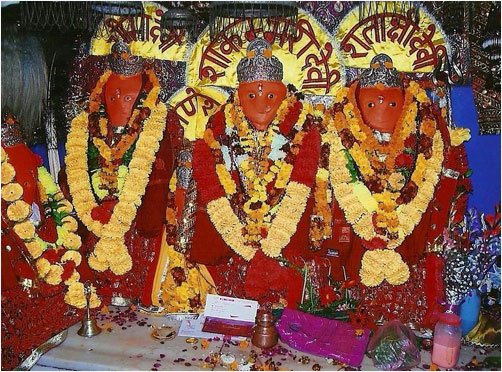
Goddess Shakambhari, together with her other manifestations—Bhima, Bhramari, and Shatakshi—is revered as the nurturing deity of the forests of ancient SehAranya, the divine presiding power over vegetation, medicinal herbs, and the sustenance of life, and the object of worship in times of famine and ecological distress.
Kapilsthana
Rishi Kapil, the founder of Sankhya Yoga, was so deeply drawn to this Aranya and inspired by the serene banks of the Ganga that he established his ashram here. For a long time thereafter, the region came to be known as Kapilsthana.
Saharanpur
Overshadowed by the more prominent names of Gangadwar, Mayapuri, and Haridwar, the outer green expanse of Aranya — today’s Saharanpur — never quite received the stature it deserved. Yet this sacred woodland, a principal seat of penance and austerity for ancient Rishis, was in no way lesser in significance.
“Overshadowed by the celebrated names of Gangadwar, Mayapuri and Haridwar, the ancient woodland of SehAranya—present-day Saharanpur—remained largely forgotten, though it was once a flourishing centre of sages, hermitages and learning.”
SehAranya Oriental Research Centre (SORC)
Inspired by the cultural and spiritual legacy of SehAranya and the vision of my Acharya Dr. Kedarnath Prabhakar, SehAranya Oriental Research Centre was established on 31 July 2022 to revive, study, and disseminate India’s ancient knowledge traditions through research, publications, training, and public engagement.
Curtesy
BOOK: “Bharat Vishwa Sabhyataon Se Purva Gyan Vigyan Ki Matra Bhoomi“
Author: Dr. Akash Chanda
ISBN – 9788168533554
Publisher: SehAranya Oriental Research Centre